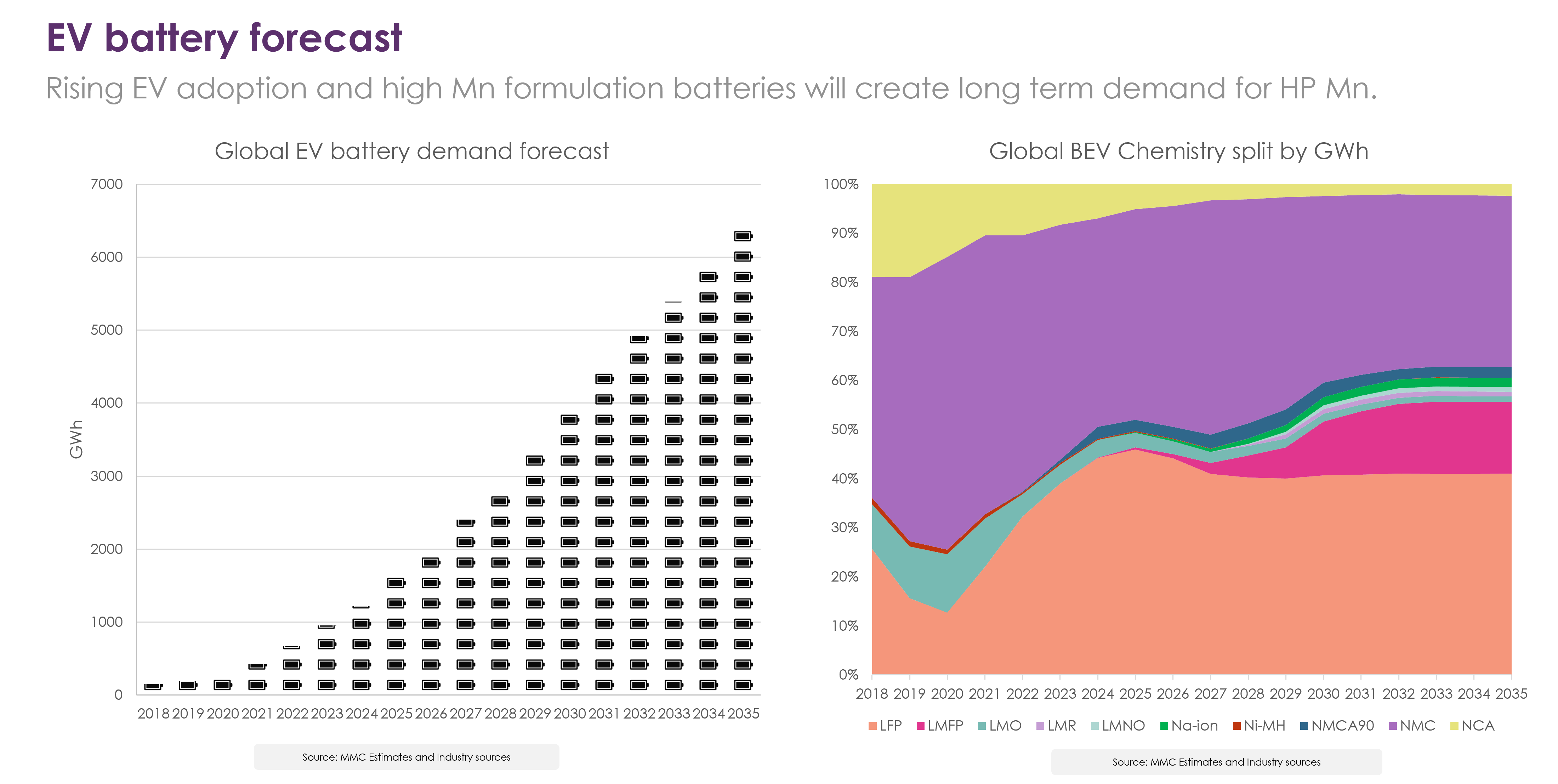
The lithium-ion battery (LiB) market is experiencing transformative growth, fuelled by a worldwide demand for electric vehicles (EVs), battery energy storage systems (BESS), and portable electronics. The urgent need for cleaner transportation solutions and a global commitment to reducing carbon emissions have accelerated EV adoption. Forecasts indicate a 294% increase in E-transportation Lithium-ion battery demand between 2025 and 2035. Scaling battery raw material production will be essential to meet this demand.
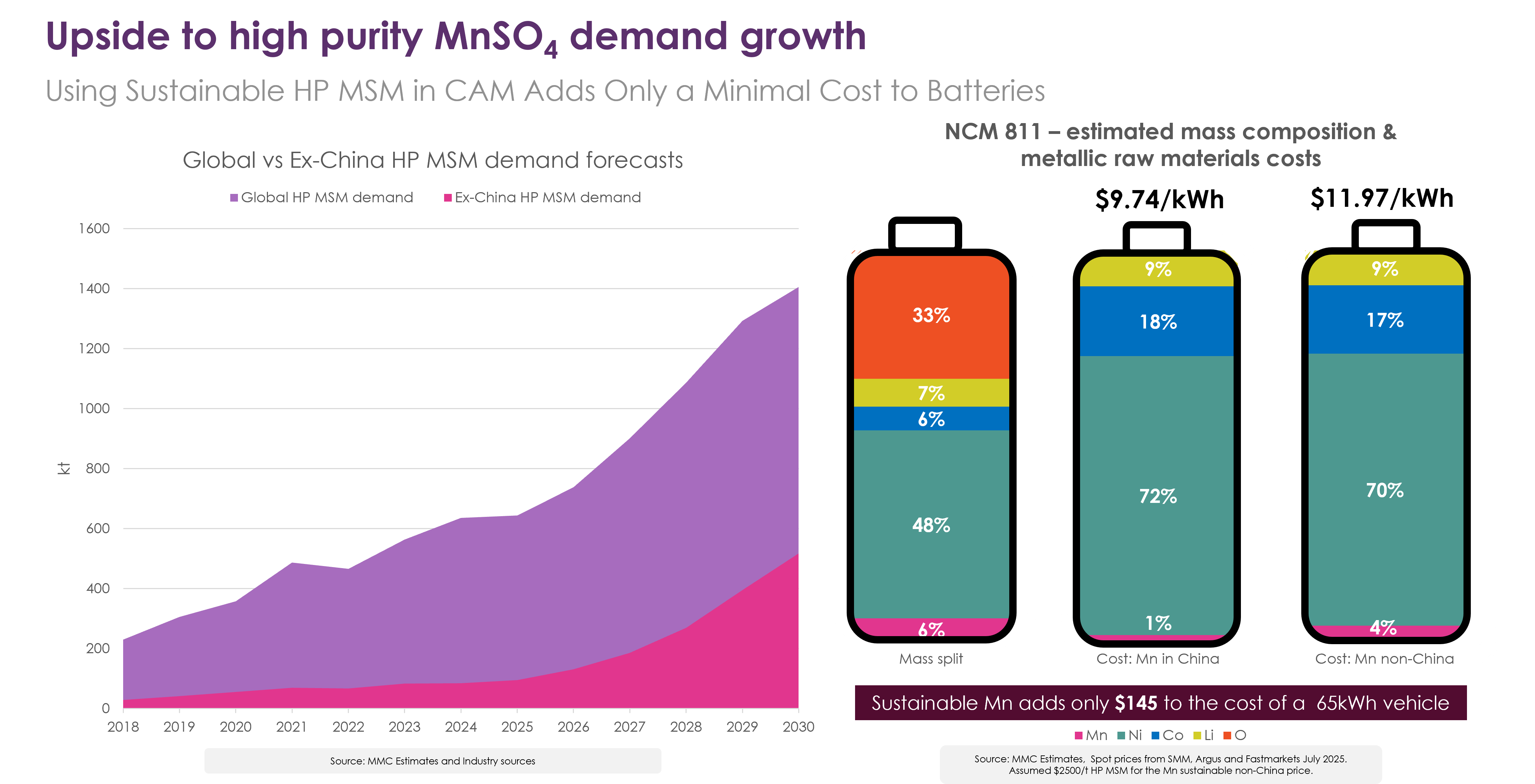
As a key ingredient in many battery compositions, the high-purity manganese sulphate monohydrate (HP MSM) market is positioned for explosive growth alongside the LiB industry. In 2024, global production of HP MSM stood at ~230 kt according to the International Manganese Institute (IMnI), yet cathode active material (CAM) forecasts project demand for HP MSM to surge to ~1.4 Mt by 2030. This rapid expansion highlights the critical need for reliable HP MSM supply chains, sustainable sourcing practices, and ongoing innovation in battery technologies and recycling.
Manganese can be used in a variety of different types of batteries, including:
- Nickel-Manganese-Cobalt (NMC) batteries
- Lithium Manganese Nickel Oxide (LMNO) batteries
- Lithium Manganese Rich (LMR) batteries
- Lithium Iron Manganese Phosphate (LMFP) batteries
Why is Manganese used in Lithium-ion batteries?
Increased capacity: Manganese can help increase lithium-ion batteries' capacity by up to 20%. This is because manganese has a high electrochemical potential, which means that it can store more lithium ions than other materials.
Improved safety: Manganese can help improve the safety of lithium-ion batteries and improve their safety by making them less prone to overheating and combustion. This is because manganese is a good conductor of heat, which helps to dissipate heat away from the battery.
Reduced cost: Manganese is a relatively inexpensive material that can help reduce the cost of lithium-ion batteries. This is because manganese is more abundant than other materials used in lithium-ion batteries, such as Cobalt.